
Nepal and Kailash Sacred Journey | 15-18 Days
Nepal and Mount Kailash form a single sacred arc: Pashupatinath in Kathmandu, Muktinath in the Upper Mustang highlands, and the axis mundi of Kailash itself on the Tibetan plateau. Hindu tradition holds that Kailash is the home of Lord Shiva; Buddhist cosmology places it at the centre of the universe as Mount Meru; Bon tradition considers it the seat of all spiritual power. Completing the Kora (parikrama) around Kailash — a 52 km circuit crossing the Drolma La at 5,636 m — is considered among the most spiritually meritorious acts a human being can perform. Eco Holiday Asia plans this combined journey from Kathmandu through Muktinath and on to the Tibetan plateau, managing all permits, logistics and support with its licensed Tibet partner.
Sacred Sites
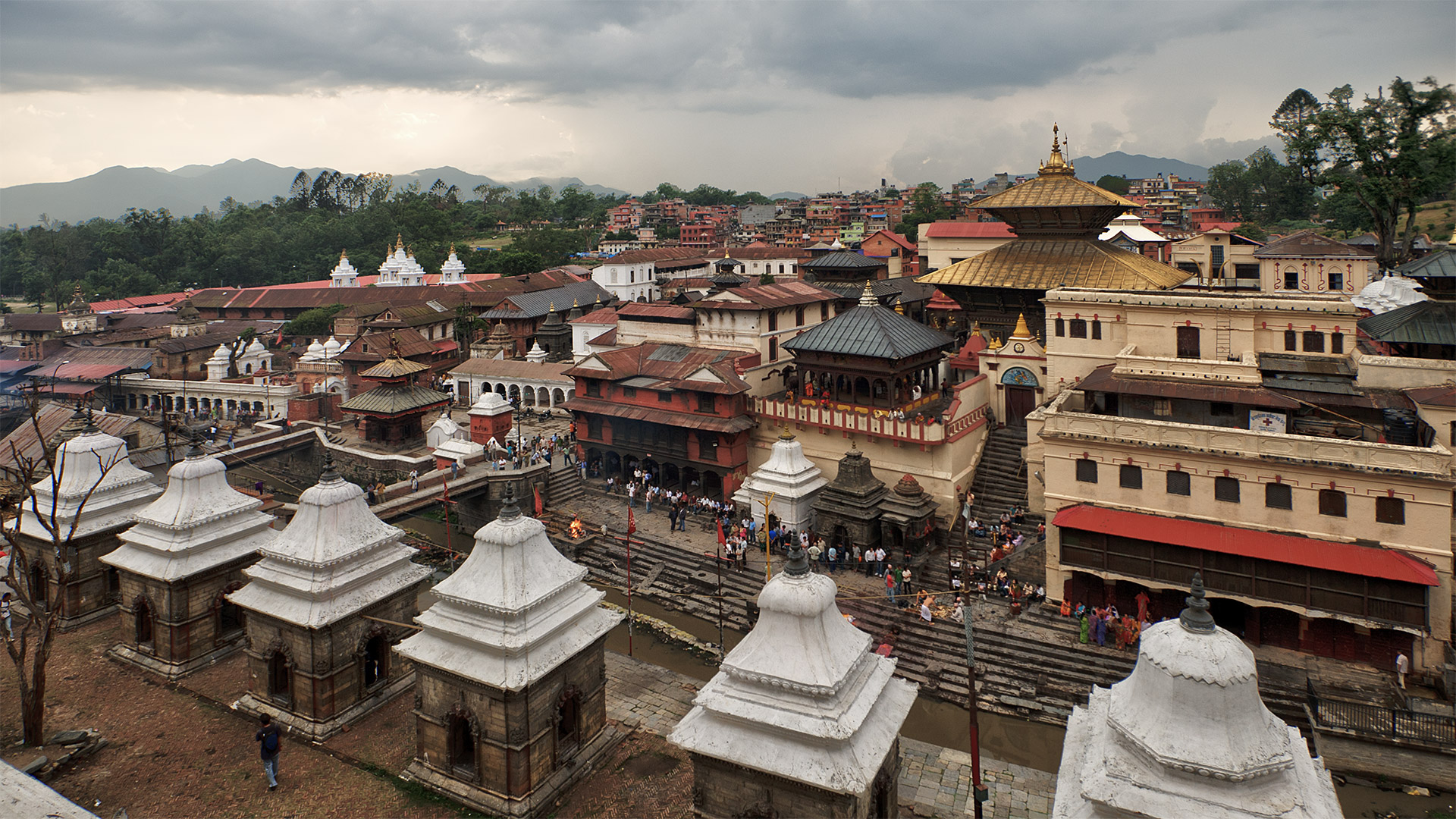
Pashupatinath Temple, Kathmandu
The most sacred Hindu temple in Nepal and one of the most important Shaivite shrines in the world, Pashupatinath stands on the banks of the Bagmati river — a tributary of the Ganges — and has been a pilgrimage destination for over 1,500 years. The evening aarti ceremony on the ghats, with oil lamps lit along the river as funeral pyres burn on the opposite bank, is one of the most moving spiritual experiences in Asia.
Muktinath Temple (3,710 m), Upper Mustang
Sacred to both Hindus and Buddhists, Muktinath is one of the 108 Divya Desams (sacred Vishnu temples) in the Hindu tradition and a significant pilgrimage site for Tibetan Buddhists as Chumig Gyatsa (the Hundred Springs). The Jwala Mai shrine combines a natural flame burning from the rock with a water spring — an extremely rare combination of fire and water considered miraculous.
Lake Manasarovar (4,590 m)
The highest freshwater lake in the world and one of the most sacred in both Hindu and Buddhist traditions. Bathing in Manasarovar is believed to cleanse a lifetime of sins. The lake sits between Mount Kailash to the north and Gurla Mandhata (7,694 m) to the south.
Mount Kailash (6,638 m)
The axis mundi of four great religions: Hinduism, Buddhism, Jainism and Bon. No mountaineering has ever been attempted on Kailash — it is entirely reserved as a sacred mountain. The Kora (parikrama/circumambulation) is the world’s most spiritually significant mountain circuit.
Itinerary
Airport transfer. Welcome briefing with Eco Holiday Asia guide. Afternoon at leisure. Overnight Kathmandu.
Pashupatinath Temple — the most important Shaivite shrine in Nepal, on the banks of the Bagmati river. Evening aarti ceremony at the ghats. Boudhanath Stupa (evening kora). Swayambhunath Monkey Temple.
Morning flight to Pokhara. Connect to Jomsom (20-min flight over the Annapurna range). Afternoon: explore Jomsom village. Overnight Jomsom guesthouse.
Drive up the Kali Gandaki valley to Muktinath (3,710 m). Visit the Muktinath temple complex: Jwala Mai (flame and water spring), Vishnu shrine, 108 water spouts. Buddhist Gompa adjacent to the temple. Return to Jomsom for overnight.
Morning Jomsom–Pokhara flight. Connect to Kathmandu. Afternoon rest and preparation for Tibet segment.
Cross into Tibet via the Kyirong/Rasuwagadhi border crossing. Transfer to Saga (4,450 m). First night on the Tibetan plateau. Slow pace for acclimatisation.
Continue west across the plateau. Vast open landscape, nomad camps, yak herds. Paryang (4,400 m). Overnight guesthouse.
Reach Lake Manasarovar (4,590 m) — sacred in both Hindu and Buddhist traditions. Holy dip or ritual water offering at the lake shore. First views of Mount Kailash (6,638 m) from the south bank. Overnight near the lake.
Gentle acclimatisation morning at Manasarovar. Drive to Darchen (4,560 m) — the starting point for the Kailash Kora. Rest. Briefing on the Kora by guide.
Begin the 52 km Kailash Kora (parikrama). Walk west along the Lha Chu valley. Arrive Dirapuk (4,870 m) with a direct north-face view of Mount Kailash. Overnight guesthouse.
The most demanding day: ascent to Drolma La pass (5,636 m) — the spiritual heart of the Kora. Descent to Zutulpuk guesthouse. Overnight.
Final Kora stage. Arrive Darchen. Rest. Celebration and optional prayer ceremony.
Begin return journey east across the plateau.
Return to Nepal via Kyirong border. Drive to Kathmandu or overnight Kyirong if late arrival. Overnight Kathmandu.
Transfer to international airport. Journey complete.
Includes & Excludes
Included
- Kathmandu airport transfers
- All internal flights (Kathmandu–Pokhara–Jomsom return)
- Private vehicle Nepal throughout
- Tibet group vehicle (shared with group members)
- Nepal cultural guide + Tibet specialist guide
- All Nepal trekking permits (Muktinath)
- Tibet Travel Permit + Kailash Restricted Area Permit
- All accommodation as specified
- Full board on Tibet/Kailash segment; breakfast in Nepal
- Kailash Kora support (yak/porter for luggage optional)
Excluded
- International flights to/from Kathmandu
- Nepal visa
- Chinese group visa (coordinated by Eco Holiday Asia)
- Travel insurance with altitude coverage (required)
- Tips for all guides and drivers
- Personal items and drinks
- Single supplement
Best Season
The Kailash Kora is accessible from May to October. The peak pilgrimage months are May-June (Buddha Purnima and Saga Dawa festival at Kailash — the most auspicious time) and August-September (post-monsoon clarity). The Tibet border crossing and Friendship Highway can be affected by weather and periodic government closures. Eco Holiday Asia monitors road and permit conditions and communicates updates. Rules may change — verify before booking.
Health & Fitness
The Kailash Kora crosses the Drolma La at 5,636 m. Proper acclimatisation is essential — the itinerary builds 2-3 days on the plateau before the Kora begins. Acute Mountain Sickness (AMS) at this altitude can be serious; Eco Holiday Asia guides carry supplemental oxygen and first aid. Travel insurance with helicopter evacuation and altitude coverage is an absolute requirement. Consult your physician about altitude medication before departure.
Responsible Pilgrimage
Eco Holiday Asia approaches this journey as a sacred pilgrimage, not a sightseeing tour. We brief all guests on the cultural and religious significance of each site before arrival, on appropriate dress and behaviour (shoes removed at temple thresholds, circumambulation clockwise, no loud conversation near prayer spaces), and on the environmental responsibility of trekking in one of the world’s most remote and fragile high-altitude ecosystems. We support local teahouses and porters at every stage.
Frequently Asked Questions
Related Journeys
Mount Kailash Mansarovar Yatra • Muktinath & Kailash Sacred Journey • Himalayan Pilgrimage Tours
Plan Your Nepal & Kailash Sacred Journey
Our Himalayan travel specialists plan every detail — permits, transport, guides, accommodation and logistics across multiple countries and regions.