Few countries pack as much UNESCO-recognised heritage into so small an area as Nepal. The country has four World Heritage Sites — two cultural and two natural — and the cultural site in the Kathmandu Valley alone bundles seven distinct monument zones. Together they tell the story of Himalayan civilisation: living Hindu and Buddhist traditions, exquisite Newari craftsmanship, the birthplace of the Buddha, and some of the planet’s richest wild landscapes.
Kathmandu Valley — Seven Monument Zones
Inscribed as a single World Heritage Site, the Kathmandu Valley comprises seven groups of monuments:
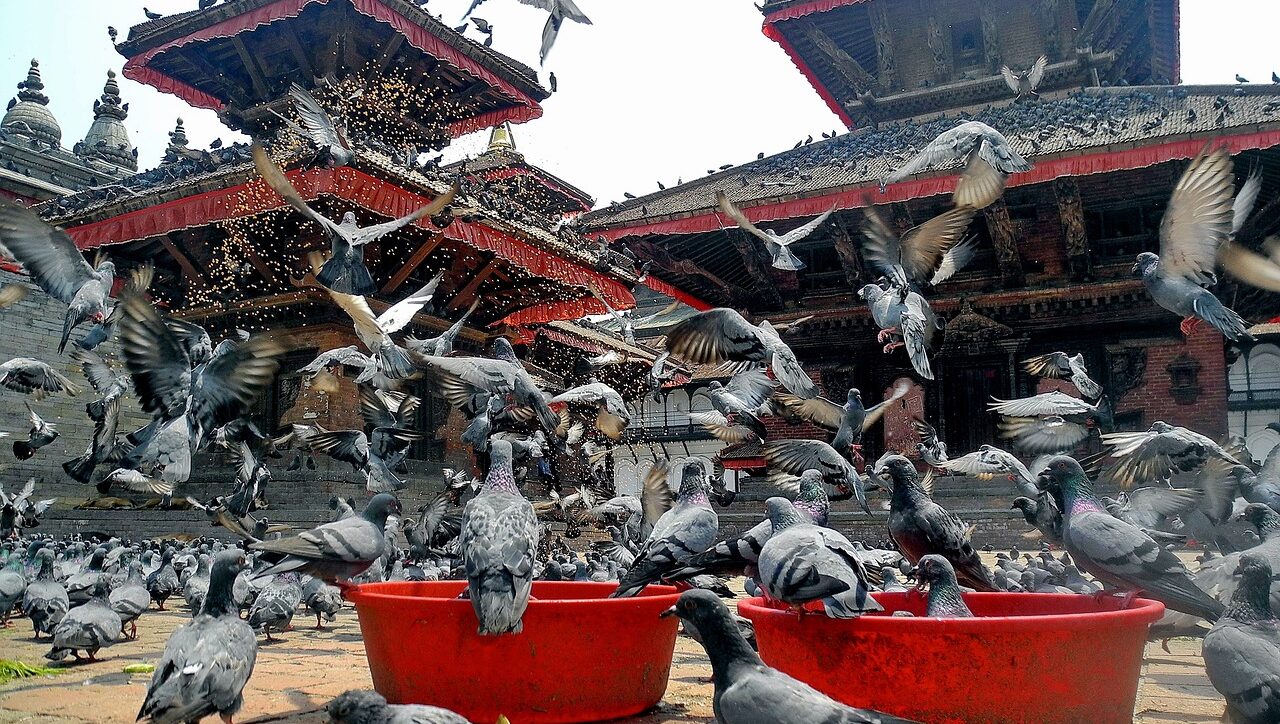
- Kathmandu Durbar Square — the old royal palace and the home of the living goddess Kumari.
- Patan Durbar Square — the finest concentration of Newari temple architecture and metalwork.
- Bhaktapur Durbar Square — a medieval city of brick and wood, famed for its pottery and the 55-Window Palace.
- Swayambhunath — the hilltop “Monkey Temple” stupa overlooking the valley.
- Boudhanath — one of the largest stupas in the world and the heart of Tibetan Buddhism in Nepal.
- Pashupatinath — the sacred Hindu temple complex on the Bagmati River.
- Changu Narayan — the valley’s oldest Hindu temple, rich in ancient stone sculpture.
Plan your visit with our Kathmandu Valley guide and cultural tours.
Lumbini — Birthplace of the Buddha
In the southern Terai plains, Lumbini is the birthplace of Siddhartha Gautama, the Buddha, and one of the most sacred pilgrimage sites in the world. The Maya Devi Temple marks the exact spot of his birth, surrounded by ancient ruins, the Ashoka Pillar, and monasteries built by Buddhist nations from across the globe. See our Lumbini heritage tour.
Chitwan & Sagarmatha — The Natural Sites
Chitwan National Park, Nepal’s first national park, protects subtropical lowland jungle that shelters the greater one-horned rhinoceros, Bengal tiger, gharial crocodile, and hundreds of bird species. Sagarmatha National Park encompasses the Everest region — a high-altitude wilderness of glaciers, Sherpa culture, and the highest mountain on earth. Explore both via our wildlife safaris and trekking journeys.
Frequently Asked Questions
How many UNESCO World Heritage Sites does Nepal have?
Four: the Kathmandu Valley and Lumbini (cultural), and Chitwan and Sagarmatha (Everest) National Parks (natural). The Kathmandu Valley site itself contains seven monument zones.
Can I see all the Kathmandu Valley sites in one trip?
Yes. The seven monument zones are within about an hour of each other; a focused 2–3 day cultural tour covers the highlights comfortably.
Is Lumbini worth visiting?
For anyone interested in Buddhism, history, or peaceful reflection, yes. It is reachable by a short flight or scenic drive and pairs well with a Chitwan safari.
When is the best time to visit Nepal’s heritage sites?
October–November and March–April offer the clearest skies and most comfortable temperatures for both the valley sites and the national parks.
See Nepal’s World Heritage Sites with Expert Guides
From the temple squares of the Kathmandu Valley to Lumbini and the wild parks of Chitwan and Everest, we’ll craft a private heritage journey around your interests and pace.