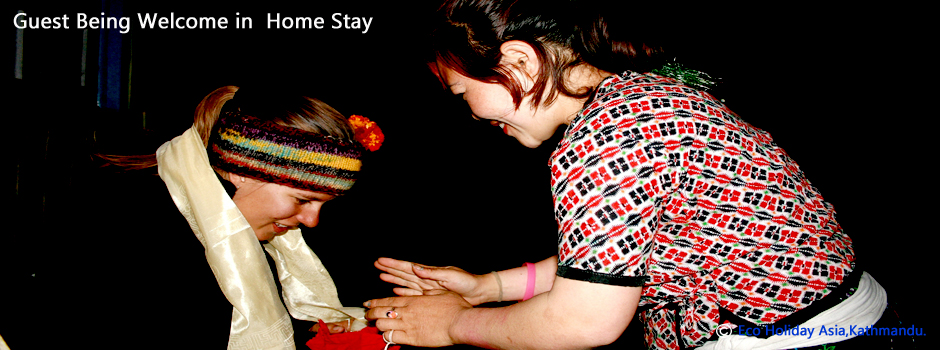
A homestay in Nepal isn’t a hotel room in someone’s house — it’s an invitation into a family’s daily life. You eat what they eat, sit where they sit, and for a night or two, you’re part of the household. It’s the closest you can get to understanding how people actually live in rural Nepal, and it’s often the most memorable part of any trip.
Community-managed homestays have been growing across Nepal since the early 2000s, supported by government tourism boards and NGOs. Unlike private Airbnb-style arrangements, community homestays are managed by village tourism committees that rotate guests among families, set standards, and distribute income fairly.
What to Expect
Your Room
Typically a private room in the family home with a simple bed, clean sheets, and blankets. Don’t expect an ensuite — bathrooms are shared and may be outside. In some villages, the toilet is a simple pit latrine. Electricity is usually available but may be intermittent. Wi-Fi is rare.
The Food
This is the highlight. Homestay meals are traditional home cooking — not restaurant food. Expect:
- Dal bhat — the Nepali staple: rice, lentil soup, vegetable curry, and pickles. Usually served twice daily with unlimited refills.
- Dhido — a thick porridge made from millet or maize flour, common in hill regions
- Gundruk — fermented leafy greens, a Nepali delicacy
- Sel roti — sweet rice flour doughnuts, a festive favourite
- Local brews — tongba (hot millet beer) in Sherpa and Rai areas, raksi (rice wine) elsewhere
Meals are cooked on the family hearth using local ingredients — often from their own garden. Vegetarian options are always available; meat depends on the family and region.
The Family
You’ll likely spend the evening around the kitchen fire with the family. Communication may be limited (not all hosts speak English, though younger family members often do), but warmth and hospitality need no translation. Bring photos of your own home and family — they’re the best conversation starters.
Where to Homestay in Nepal
Helambu — Sherpa Culture Near Kathmandu
The Helambu Sherpa villages (Sermathang, Tarke Ghyang, Melamchi Gaon) offer community homestays with a unique Sherpa culture distinct from the Khumbu. Just 4-5 hours from Kathmandu, these are among the most accessible homestay options in Nepal. Part of our Helambu Trek.
Tamang Heritage Trail — Langtang Region
Villages like Gatlang, Thuman, and Briddim offer Tamang homestays as part of the Tamang Heritage Trail. The community homestay network here was developed specifically to share tourism benefits with rural Tamang communities.
Kumroj — Tharu Culture in Chitwan
Stay with a Tharu family in Kumroj village on the edge of Chitwan National Park. Traditional Tharu longhouses, local cuisine, and cultural programs including the famous Tharu stick dance.
Sirubari — Nepal’s Pioneer Homestay Village
The Gurung village of Sirubari in western Nepal is often cited as Nepal’s first organised community homestay program (established 1997). The village sits on a hilltop with panoramic mountain views and has hosted guests for nearly three decades.
Panauti — Newari Homestay Near Kathmandu
The ancient Newari town of Panauti, just an hour from Kathmandu, offers homestays in traditional Newari houses. Explore medieval temples, watch local artisans work, and eat authentic Newari cuisine — one of Nepal’s most distinctive food traditions.
Homestay Etiquette
- Remove your shoes before entering the home
- Don’t touch the cooking area unless invited — the hearth is considered sacred
- Eat with your right hand if eating by hand (the left is considered unclean)
- Accept food gratefully — refusing food can be seen as rude. Take a small portion if you’re not hungry.
- Ask before photographing family members, especially older people
- Dress modestly — cover shoulders and knees
- Don’t give gifts to children directly — give them to the parents or the village tourism committee
- Try the local drink if offered — even a sip shows respect
What to Bring
- Sleeping bag liner (blankets are provided but a liner adds comfort and hygiene)
- Headlamp or torch (for nighttime bathroom trips)
- Toilet paper (not always provided)
- Hand sanitiser
- Small gifts — photos of your country, tea, or practical items are better than sweets
- An open mind and willingness to step outside your comfort zone
Why Community Homestays Matter
In a typical Nepali village, tourism income usually goes to a few lodge owners while most families see nothing. Community homestay programs change this by rotating guests among families, ensuring that tourism income is distributed across the village. The tourism committee typically uses a portion of fees for village projects — schools, trails, clean water, and forest conservation.
When you book a community homestay through Eco Holiday Asia, you’re not just finding a bed for the night — you’re participating in a system designed to make tourism work for entire communities. Contact us to include homestays in your Nepal trip.