Eco Holiday Asia

Gokyo Lakes Trek

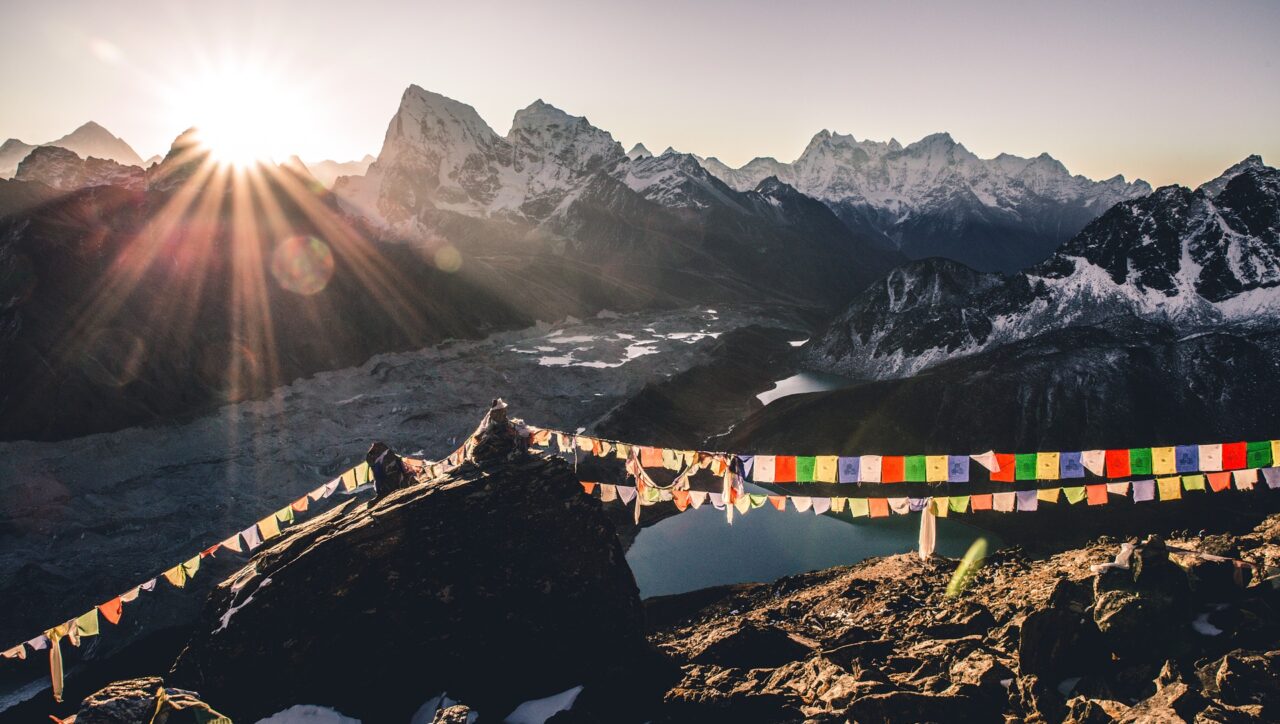
The Gokyo Lakes Trek is a stunning alternative to the Everest Base Camp route, leading through the quieter western side of the Khumbu valley to a chain of turquoise glacial lakes at the foot of Cho Oyu (8,188m). The trek culminates at Gokyo Ri (5,357m), where the sunrise panorama includes four of the world’s six highest peaks — Everest, Lhotse, Makalu, and Cho Oyu — spread across the horizon in a single sweeping view.

Unlike the crowded EBC trail, the Gokyo route sees far fewer trekkers, especially past Dole. You walk alongside the Ngozumpa Glacier — the longest in the Himalayas — through high-altitude Sherpa settlements where families have lived for generations. Our guides are from the Khumbu region and share their knowledge of the landscape, Buddhist traditions, and mountain ecology throughout the trek.

Community Impact

Your trek supports Sherpa families who run teahouses in Namche, Dole, Machhermo, and Gokyo. Porter wages, guide employment, and lodge fees stay in the Khumbu valley. By choosing the Gokyo route over the busier EBC trail, you help distribute tourism income to communities that receive fewer visitors.

Itinerary Overview

  • Day 1: Arrive Kathmandu, hotel transfer, trek briefing
  • Day 2: Fly to Lukla (2,860m), trek to Phakding (2,610m)
  • Day 3: Trek to Namche Bazaar (3,440m)
  • Day 4: Acclimatisation day in Namche — hike to Everest View Hotel
  • Day 5: Trek to Phortse Tenga (3,680m)
  • Day 6: Trek to Dole (4,110m)
  • Day 7: Trek to Machhermo (4,470m)
  • Day 8: Trek to Gokyo (4,790m)
  • Day 9: Gokyo Ri summit (5,357m), explore Gokyo Lakes
  • Day 10: Trek to Dole (4,110m)
  • Day 11: Trek to Namche Bazaar (3,440m)
  • Day 12: Trek to Lukla (2,860m)
  • Day 13: Fly Lukla to Kathmandu
  • Day 14: Departure day

Best Season

October-November (clear skies, stable weather) and March-May (warmer, rhododendron season). Winter is possible but very cold above 4,000m.

Permits

Sagarmatha National Park entry permit and Khumbu Rural Municipality permit required. We arrange all permits before your trek.

Frequently Asked Questions

How difficult is the Gokyo Lakes Trek?

Moderate to challenging. The highest point is Gokyo Ri at 5,357m. You need good fitness for 5-7 hours of walking per day at altitude. No technical climbing is involved.

Is Gokyo Ri harder than Everest Base Camp?

The altitude is similar (Gokyo Ri 5,357m vs EBC 5,364m). Gokyo Ri involves a steep morning ascent from 4,790m but the overall trek has fewer long walking days. Both require proper acclimatisation.

Can I combine Gokyo Lakes with Everest Base Camp?

Yes. The Cho La Pass connects Gokyo to the EBC route via Dzongla. This adds 3-4 days and requires experience with high passes. Ask us about the combined itinerary.

Three Passes Trek

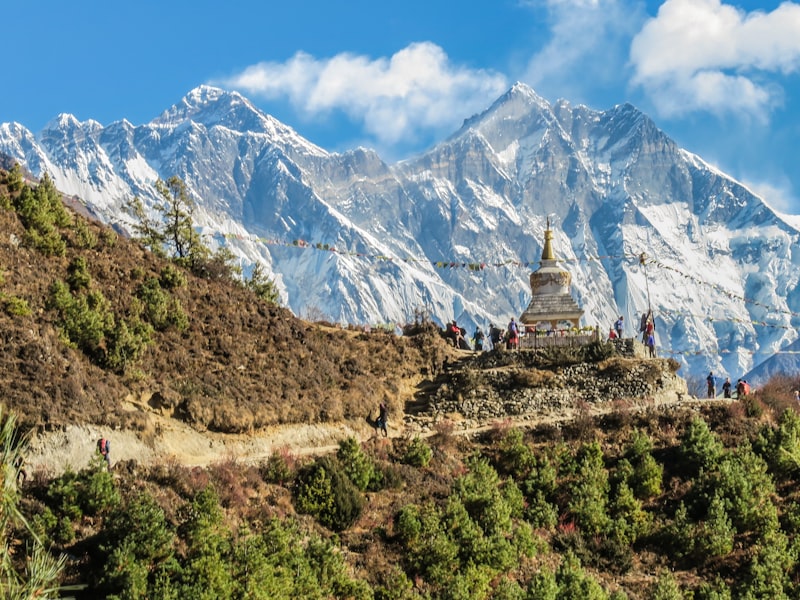
The Three Passes Trek is the ultimate Everest region adventure — a 20-day circuit that crosses three high passes above 5,300m, visits both Everest Base Camp and the Gokyo Lakes, and passes through some of the most remote Sherpa settlements in the Khumbu valley. This is not a beginner trek. It rewards experienced trekkers with scenery and solitude that the standard EBC route cannot match.

You cross Kongma La (5,535m) between Chhukung and Lobuche, Cho La (5,420m) from Dzongla to Gokyo, and Renjo La (5,360m) descending toward Thame. Between passes, you summit both Kala Patthar and Gokyo Ri for the two finest viewpoints in the Everest region. The route circles the entire Khumbu basin, giving you perspectives of Everest, Lhotse, Nuptse, Ama Dablam, Cho Oyu, and Makalu from every angle.

Community Impact

This extended trek supports lodges and families in villages that most trekkers never reach — Chhukung, Dzongla, Dragnag, Lungden, and Thame. Your three weeks in the valley provide income across the full breadth of the Khumbu community, not just the main EBC corridor.

Itinerary Overview

  • Days 1-4: Kathmandu, fly to Lukla, trek to Namche Bazaar with acclimatisation
  • Days 5-7: Namche to Tengboche, Dingboche, Chhukung with acclimatisation hikes
  • Day 8: Cross Kongma La Pass (5,535m) to Lobuche
  • Day 9: Trek to Gorak Shep, afternoon at Everest Base Camp (5,364m)
  • Day 10: Sunrise at Kala Patthar (5,545m), trek to Dzongla
  • Day 11: Cross Cho La Pass (5,420m) to Dragnag
  • Day 12: Trek to Gokyo (4,790m)
  • Day 13: Summit Gokyo Ri (5,357m), explore the lakes
  • Day 14: Cross Renjo La Pass (5,360m) to Lungden
  • Days 15-16: Trek through Thame to Namche Bazaar
  • Days 17-18: Trek Namche to Lukla
  • Day 19: Fly Lukla to Kathmandu
  • Day 20: Departure day

Best Season

October-November (most stable weather for high passes) and late March-May. Passes may be snowbound in winter and monsoon.

Permits

Sagarmatha National Park permit and Khumbu Rural Municipality permit. All arranged by our team.

Frequently Asked Questions

How hard is the Three Passes Trek?

Very challenging. You cross three passes above 5,300m, spend multiple days above 5,000m, and walk 6-8 hours daily on rough terrain. Previous high-altitude trekking experience and excellent fitness are essential.

Do I need climbing gear?

No technical climbing. However, crampons or microspikes may be needed on Cho La in certain conditions. We provide these if required.

Can I shorten the Three Passes Trek?

The route can be done in 17-18 days with fewer rest days, but we recommend 20 days for proper acclimatisation and to enjoy the experience without rushing.

Annapurna Base Camp Trek

The Annapurna Base Camp Trek takes you into the heart of the Annapurna Sanctuary — a natural amphitheatre surrounded by peaks above 7,000m on all sides. Over 12 days, you walk through subtropical forests, rhododendron groves, terraced farmland, and Gurung hill villages before ascending into the alpine zone and arriving at base camp (4,130m), where Annapurna I, Machhapuchhre, Hiunchuli, and Gangapurna tower overhead.

This is one of Nepal’s most popular treks for good reason: the mountain scenery is extraordinary, the trail is well-established, and the cultural richness of the Gurung and Magar communities along the route adds depth that pure mountain treks often lack. Our guides are from the Annapurna region and know both the trails and the families who run the lodges you stay in.

Community Impact

The ABC trail passes through villages where families have converted their homes into teahouses over decades. Your lodge fees, meals, and guide wages stay in these communities. In Ghandruk and Chhomrong, community tourism cooperatives manage visitor flow and reinvest in local schools and trail maintenance.

Itinerary Overview

  • Day 1: Arrive Kathmandu, transfer to hotel, trek briefing
  • Day 2: Drive Kathmandu to Pokhara (tourist bus or flight)
  • Day 3: Drive to Nayapul, trek to Tikhedhunga (1,540m)
  • Day 4: Trek to Ghorepani (2,860m)
  • Day 5: Sunrise at Poon Hill (3,210m), trek to Tadapani (2,630m)
  • Day 6: Trek to Chhomrong (2,170m)
  • Day 7: Trek to Dovan (2,600m)
  • Day 8: Trek to Deurali (3,230m)
  • Day 9: Trek to Annapurna Base Camp (4,130m) via Machhapuchhre Base Camp
  • Day 10: Sunrise at ABC, descend to Bamboo (2,310m)
  • Day 11: Trek to Nayapul, drive to Pokhara
  • Day 12: Fly or drive Pokhara to Kathmandu, departure

Best Season

October-November (clear skies, cool temperatures) and March-May (warmer, rhododendrons in bloom). The Sanctuary can receive heavy snow in winter.

Permits

Annapurna Conservation Area Permit (ACAP) and TIMS card required. We handle all permits.

Frequently Asked Questions

How difficult is the Annapurna Base Camp Trek?

Moderate. The highest point is 4,130m, well below the altitude of Everest-region treks. You walk 5-7 hours per day on well-maintained trails. Good general fitness is needed but no technical skills.

Can I do ABC without Poon Hill?

Yes. A direct route via Chhomrong skips Ghorepani and Poon Hill, reducing the trek by 2 days. However, Poon Hill offers one of the best sunrise views in Nepal and is worth the detour.

Is the Annapurna Base Camp Trek suitable for beginners?

Yes, for fit beginners. The altitude is moderate, the trail is well-marked, and teahouse accommodation is comfortable. We include acclimatisation time and our guides pace the trek to suit your fitness.

Ghorepani Poon Hill Trek

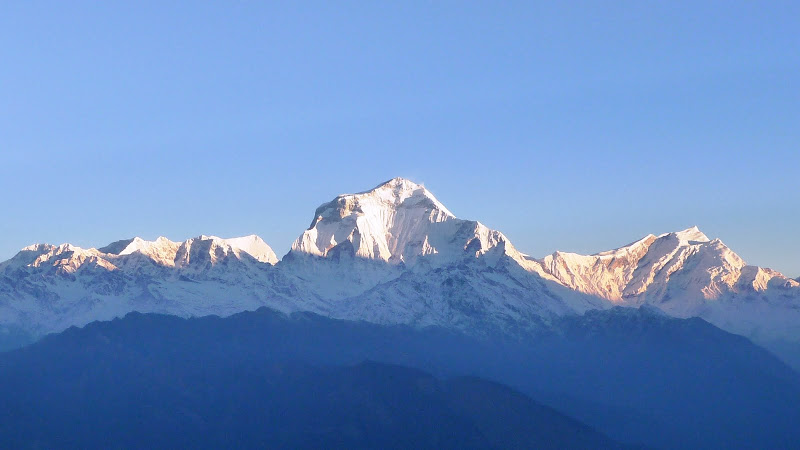
The Ghorepani Poon Hill Trek is Nepal’s finest short trek — a 7-day journey through Gurung hill villages, rhododendron forests, and terraced farmland to one of the most celebrated viewpoints in the Himalayas. From Poon Hill (3,210m) at sunrise, you see Dhaulagiri (8,167m), the entire Annapurna massif, Machhapuchhre (Fishtail Mountain), and snow-capped peaks stretching across the horizon in every direction.

This is the trek we recommend most often to first-time visitors. The altitude stays moderate, the trails are well-established, the teahouses are comfortable, and the scenery is world-class. You walk through living communities — Gurung and Magar villages where farming, weaving, and traditional life continue alongside trekking tourism. Our guides are from these communities and introduce you to families, food, and stories along the way.

Community Impact

Ghandruk and Ghorepani are model examples of community-managed trekking tourism. Local cooperatives manage lodges, maintain trails, and distribute tourism income across the village. Your stay directly supports these systems — from the family cooking your dal bhat to the porter carrying your bag.

Itinerary Overview

  • Day 1: Drive Kathmandu to Pokhara (6-7 hours or 25-minute flight)
  • Day 2: Drive to Nayapul, trek to Tikhedhunga (1,540m)
  • Day 3: Trek to Ghorepani (2,860m) through rhododendron forest
  • Day 4: Sunrise at Poon Hill (3,210m), trek to Tadapani (2,630m)
  • Day 5: Trek to Ghandruk (1,940m), explore the Gurung village
  • Day 6: Trek to Nayapul, drive to Pokhara
  • Day 7: Fly or drive to Kathmandu, departure

Best Season

October-November and March-May. Spring (March-April) is especially beautiful when the rhododendron forests are in full bloom.

Frequently Asked Questions

Is the Poon Hill Trek suitable for beginners?

Yes. This is one of the most accessible treks in Nepal. The altitude is moderate (max 3,210m), trails are well-maintained, and you walk 4-6 hours per day. Good general fitness is sufficient.

Can I do this trek with children?

Children aged 10 and above who enjoy hiking can do this trek comfortably. We adjust the pace and provide additional porter support for families.

What is the best time for rhododendrons?

Late March to mid-April. The forests between Tikhedhunga and Ghorepani are spectacular during bloom season.

Mardi Himal Trek

The Mardi Himal Trek follows a dramatic ridgeline directly toward the face of Machhapuchhre (Fishtail Mountain) — one of Nepal’s most sacred and visually striking peaks. This relatively new route opened to trekkers in recent years and remains far less crowded than the nearby Annapurna Base Camp or Poon Hill trails. You walk through forests of oak and rhododendron, emerge onto open ridgelines above the clouds, and arrive at Mardi Himal Base Camp (4,500m) with Machhapuchhre and Annapurna South filling the sky ahead.

What makes Mardi Himal special is the feeling of walking on the roof of the world with very few other people around. The lodges are small and family-run, the trail passes through genuine rural Nepal, and the views — especially from High Camp at sunset — are among the most dramatic in the Annapurna region. Our guides know this trail intimately and can time the trek so you catch the best light and weather windows.

Community Impact

The Mardi Himal route is newer than classic Annapurna trails, meaning the communities along it are still building their tourism livelihoods. Your visit supports small lodge operators, local guides, and families in villages like Lwang and Siding who are just beginning to benefit from trekking tourism.

Itinerary Overview

  • Day 1: Arrive Kathmandu, transfer to hotel
  • Day 2: Drive or fly to Pokhara
  • Day 3: Drive to Kande, trek to Pothana/Forest Camp (2,490m)
  • Day 4: Trek through forest to Low Camp (2,990m)
  • Day 5: Trek to High Camp (3,580m), ridge walking above the clouds
  • Day 6: Trek to Mardi Himal Base Camp (4,500m), return to High Camp
  • Day 7: Descend to Siding village, drive to Pokhara
  • Day 8: Return to Kathmandu

Frequently Asked Questions

Is Mardi Himal Trek difficult?

Moderate. The trail involves some steep sections and the highest point is 4,500m. You walk 5-6 hours per day. Suitable for fit trekkers with some hiking experience.

How does Mardi Himal compare to Poon Hill?

Mardi Himal is higher (4,500m vs 3,210m), wilder, and less crowded. Poon Hill is easier and more established. Both have outstanding views. Choose Mardi for adventure and solitude, Poon Hill for accessibility.

Khopra Danda Trek

The Khopra Danda Trek is one of Nepal’s best community-managed trekking routes — a 9-day journey to a high ridge with commanding views of Dhaulagiri (8,167m), Annapurna South, Nilgiri, and the entire western Annapurna range. The community lodge at Khopra Ridge (3,660m) is entirely owned and operated by local villagers, with profits reinvested in schools, health posts, and trail maintenance. This is community-based tourism at its most genuine.

The optional side trip to Khayer Lake (4,500m), a sacred lake below Annapurna South, adds an extra day of high-altitude walking through alpine meadows where few trekkers venture. The route connects with the Ghorepani-Poon Hill trail, so you can combine both for a comprehensive Annapurna experience without repeating any ground.

Community Impact

Khopra Danda is a flagship community tourism project developed with support from the Annapurna Conservation Area Project (ACAP). The lodge at Khopra Ridge was built by villagers from Swanta and nearby settlements, and all revenue stays in the community. Your trek directly funds local livelihoods, trail workers, and community development projects.

Itinerary Overview

  • Day 1: Drive or fly Kathmandu to Pokhara
  • Day 2: Drive to Nayapul, trek to Tikhedhunga (1,540m)
  • Day 3: Trek to Ghorepani (2,860m)
  • Day 4: Sunrise at Poon Hill, trek to Swanta (2,200m)
  • Day 5: Trek to Khopra Ridge Community Lodge (3,660m)
  • Day 6: Side trip to Khayer Lake (4,500m) and return to Khopra
  • Day 7: Descend to Tatopani or Ghara (1,890m)
  • Day 8: Drive to Pokhara
  • Day 9: Return to Kathmandu

Frequently Asked Questions

Is the Khopra Danda Trek difficult?

Moderate. The highest point is Khayer Lake at 4,500m (optional). The main ridge at 3,660m is comfortable for fit trekkers. Some steep ascent sections between Swanta and Khopra.

What makes this a community trek?

The lodges, guides, and support staff are all from local villages. Profits go to community funds, not private operators. You eat locally grown food, sleep in community-built lodges, and walk with guides who grew up in these hills.

Langtang Valley Trek

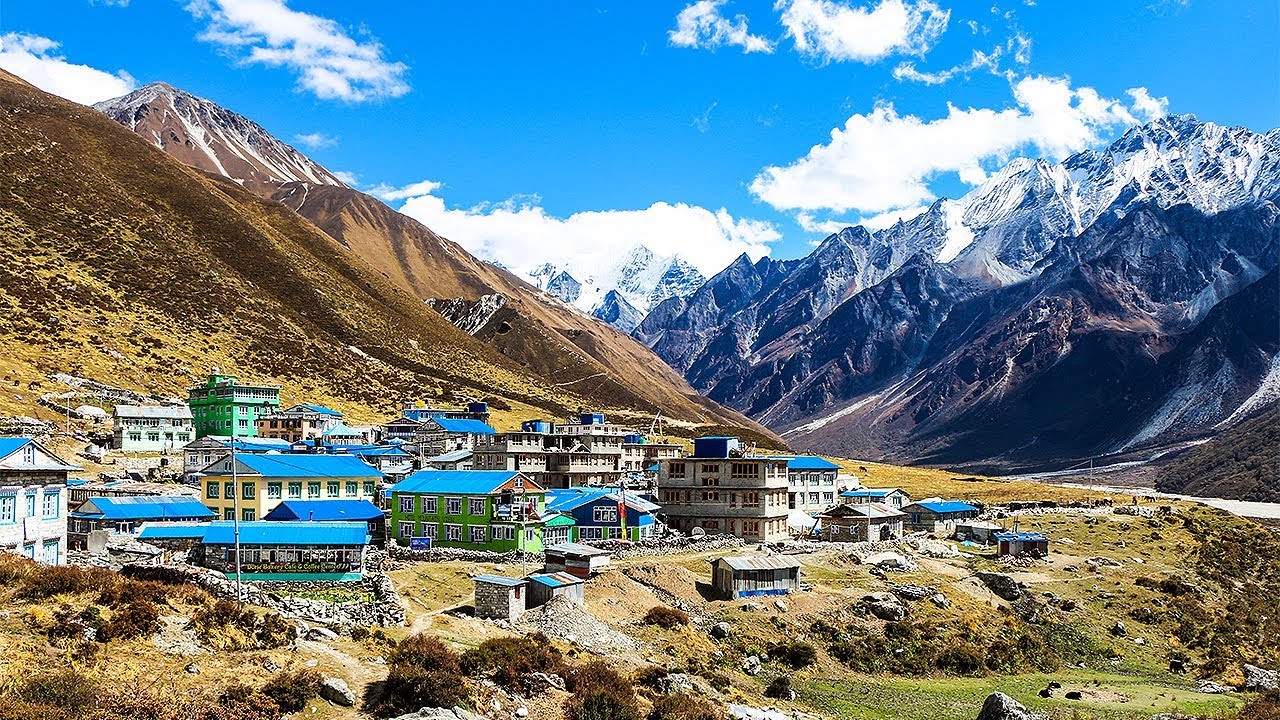
The Langtang Valley Trek follows the Langtang Khola through one of Nepal’s most beautiful Himalayan valleys — and one of its most resilient. The valley was devastated by avalanches during the 2015 earthquake, and the Tamang communities here rebuilt their villages and lodges with extraordinary determination. Today, trekking in Langtang directly supports families who have poured everything into their recovery.

The trail winds through subtropical forests, bamboo groves, and yak pastures before opening into the broad upper valley below Langtang Lirung (7,227m). At Kyanjin Gompa, you visit an ancient monastery and a cheese factory that produces yak cheese using traditional Swiss-taught methods. An optional climb to Tserko Ri (4,984m) rewards with panoramic views across the entire valley and into Tibet.

Community Impact

Every lodge in the Langtang Valley is family-run by Tamang villagers who rebuilt after the earthquake. Your visit is not just tourism — it is a direct contribution to the recovery of communities that lost homes, family members, and livelihoods. Guides from the valley share the story of their villages with pride and gratitude.

Itinerary Overview

  • Day 1: Drive Kathmandu to Syabrubesi (1,550m) — 7-8 hours through hill country
  • Day 2: Trek to Lama Hotel (2,380m) through oak and rhododendron forest
  • Day 3: Trek to Langtang village (3,430m)
  • Day 4: Trek to Kyanjin Gompa (3,870m)
  • Day 5: Explore Kyanjin — optional hike to Tserko Ri (4,984m) or Kyanjin Ri
  • Day 6: Trek down to Lama Hotel (2,380m)
  • Day 7: Trek to Syabrubesi (1,550m)
  • Day 8: Drive to Kathmandu
  • Days 9-10: Kathmandu and departure

Frequently Asked Questions

Is the Langtang Valley Trek difficult?

Moderate. Maximum altitude is 3,870m (Kyanjin Gompa) or 4,984m if you climb Tserko Ri. Trails are well-established. Walking 5-6 hours per day. Suitable for fit beginners.

Do I need to fly to start this trek?

No. Langtang starts from Syabrubesi, reached by road from Kathmandu in 7-8 hours. This makes it one of the most accessible major treks in Nepal.

Explore More

Related experiences:

Plan your Nepal trip: Trekking in Nepal | Best Places to Visit

Ready to book? Contact Eco Holiday Asia or message us on WhatsApp. We reply within 24 hours.

Gosaikunda Trek

The Gosaikunda Trek leads to one of Nepal’s holiest high-altitude lakes — Gosaikunda (4,380m), a glacial lake sacred to both Hindus and Buddhists. Legend holds that Lord Shiva created the lake by striking the mountain with his trident. During the Janai Purnima festival in August, thousands of pilgrims trek here to bathe in the sacred waters. Outside festival season, the trail is quiet and the mountain scenery is stunning.

Starting from Dhunche (reached by road from Kathmandu), the route climbs through dense rhododendron and oak forests before emerging into alpine meadows dotted with stone shelters. The lake itself sits in a dramatic cirque below Gosaikunda Peak, with the Langtang and Ganesh Himal ranges visible on clear days. This is an excellent shorter trek for those wanting a meaningful mountain experience without committing to a two-week expedition.

Itinerary Overview

  • Day 1: Drive Kathmandu to Dhunche (1,960m)
  • Day 2: Trek to Sing Gompa (3,330m)
  • Day 3: Trek to Gosaikunda Lake (4,380m)
  • Day 4: Explore the sacred lakes, optional hike to Laurebina viewpoint
  • Day 5: Descend to Sing Gompa
  • Day 6: Trek to Dhunche
  • Day 7: Drive to Kathmandu
  • Day 8: Departure

Frequently Asked Questions

Is Gosaikunda difficult?

Moderate. The highest point is 4,380m. The ascent from Sing Gompa to Gosaikunda is steep but the trail is clear. Walking 5-6 hours per day.

Can I combine Gosaikunda with Langtang?

Yes. A popular option crosses Laurebina La (4,610m) to connect with the Helambu trail, or you can do Langtang Valley first and add Gosaikunda as an extension. Ask us for the combined itinerary.

Explore More

Related experiences:

Plan your Nepal trip: Trekking in Nepal | Best Places to Visit

Ready to book? Contact Eco Holiday Asia or message us on WhatsApp. We reply within 24 hours.

Upper Mustang Trek

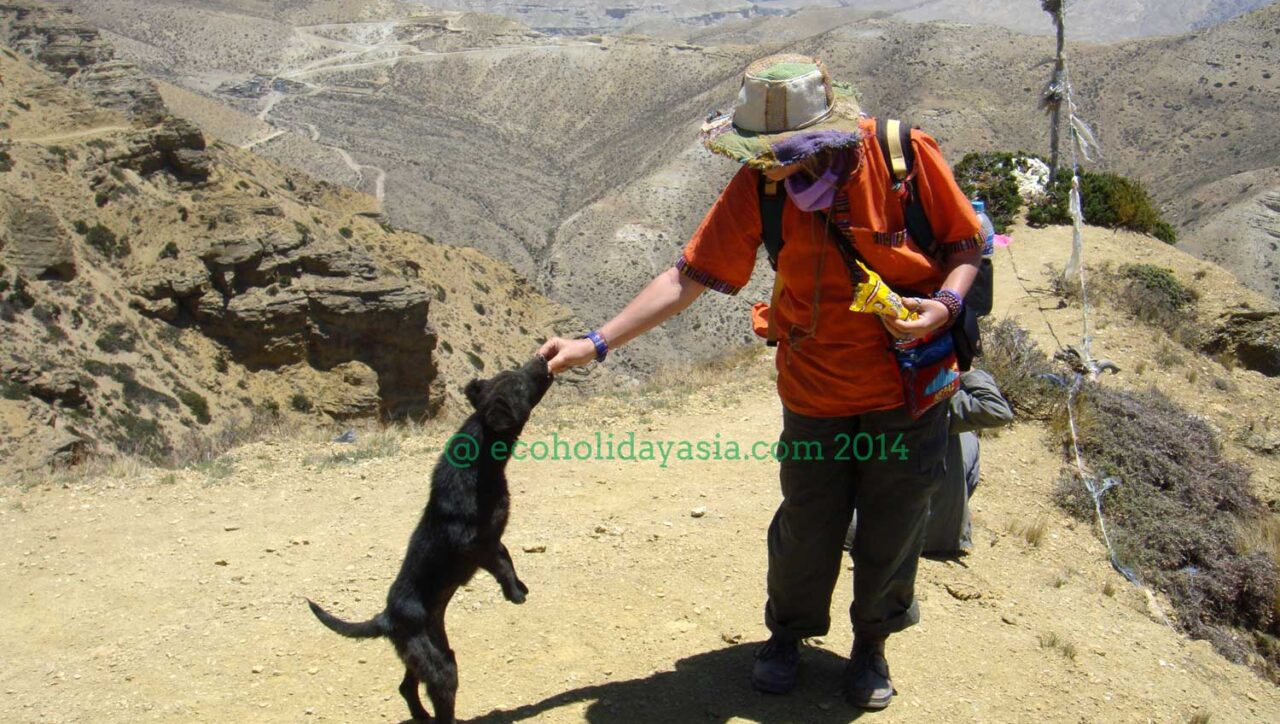
The Upper Mustang Trek enters one of the most culturally preserved regions in the Himalayas — the former Kingdom of Lo, a Tibetan Buddhist enclave that was closed to foreigners until 1992. The landscape is unlike anything else in Nepal: red-rock canyons carved by wind, arid desert plateaus, cave monasteries with centuries-old murals, and the walled medieval city of Lo Manthang, where the royal palace still stands and monks chant in monasteries that predate most European cathedrals.

This is a restricted area trek requiring a special permit and a registered trekking agency. The restrictions exist to protect Mustang’s fragile culture and environment, and they succeed — you walk through communities where Tibetan Buddhism, traditional agriculture, and ancient customs continue as they have for centuries. The landscape shifts dramatically from the lush Kali Gandaki valley to the high desert of Upper Mustang, with Dhaulagiri and Nilgiri as constant companions on the horizon.

Community Impact

Tourism in Upper Mustang directly supports Loba families who operate small lodges and guesthouses. Permit fees contribute to cultural preservation projects in Lo Manthang and surrounding villages. Your trek supports monastery restoration, traditional arts, and the livelihoods of families in one of Nepal’s most remote inhabited regions.

Itinerary Overview

  • Days 1-2: Kathmandu to Pokhara, fly to Jomsom (2,720m)
  • Day 3: Trek to Kagbeni (2,810m), entry to restricted zone
  • Day 4: Trek to Chele (3,050m) through the Kali Gandaki
  • Day 5: Trek to Syangboche (3,475m) via cliff trail
  • Day 6: Trek to Ghami (3,520m), the largest village on the route
  • Day 7: Trek to Charang (3,560m), visit the monastery and palace ruins
  • Day 8: Trek to Lo Manthang (3,840m), the walled capital
  • Days 9-10: Explore Lo Manthang — monasteries, palace, sky caves
  • Days 11-14: Return trek via alternate route through Dhi and Yara
  • Day 15: Fly Jomsom to Pokhara
  • Day 16: Return to Kathmandu

Permits

Upper Mustang requires a restricted area permit (USD 50 per day as of 2026). Must be arranged through a registered trekking agency. Annapurna Conservation Area Permit also required. Restricted area permit rules and fees may change. Eco Holiday Asia verifies the latest requirements with the Department of Immigration before confirming your trek.

Frequently Asked Questions

How difficult is the Upper Mustang Trek?

Moderate. Maximum altitude is 3,840m (Lo Manthang). The terrain involves some steep climbs through canyons but nothing technical. Wind can be strong in the afternoon. Walking 5-7 hours per day.

Can I do Upper Mustang by jeep?

Yes. A jeep road now connects Jomsom to Lo Manthang. We offer a Mustang Jeep Tour for those who prefer driving. However, trekking gives you access to cliff trails and side valleys that jeeps cannot reach.

When is the best time to visit Upper Mustang?

Upper Mustang lies in the rain shadow of the Annapurna and Dhaulagiri ranges, so it receives very little monsoon rain. This makes it one of the few treks in Nepal that works well during June-August, in addition to the standard spring and autumn seasons.

Explore More

Related experiences:

Plan your Nepal trip: Trekking in Nepal | Best Places to Visit | Restricted Area Trekking

Ready to book? Contact Eco Holiday Asia or message us on WhatsApp. We reply within 24 hours.

Jomsom Muktinath Trek

The Jomsom Muktinath Trek follows the Kali Gandaki river through the deepest gorge in the world, passing between the massive flanks of Dhaulagiri (8,167m) and Annapurna I (8,091m). The destination is Muktinath Temple (3,800m), one of Nepal’s most important pilgrimage sites — sacred to both Hindus and Buddhists, where natural gas flames burn eternally alongside a spring-fed water source. Pilgrims from across South Asia come here believing the site grants salvation.

Beyond the spiritual significance, this trek passes through the heart of Thakali country — a culturally distinct region famous across Nepal for its cuisine, hospitality, and entrepreneurial spirit. You eat the best dal bhat on any Nepal trek, sleep in well-maintained Thakali lodges, and walk through apple orchards that produce the brandy and cider that have made Marpha village famous.

Community Impact

The Thakali people have been running lodges and restaurants along this route for decades. Tourism is woven into their culture. Your stay supports families who take genuine pride in their hospitality, along with temple maintenance funds and community orchards.

Itinerary Overview

  • Day 1: Arrive Kathmandu
  • Day 2: Drive or fly to Pokhara
  • Day 3: Fly Pokhara to Jomsom (2,720m), trek to Kagbeni (2,810m)
  • Day 4: Trek to Muktinath Temple (3,800m)
  • Day 5: Explore Muktinath, return to Kagbeni
  • Day 6: Trek to Marpha (2,670m), visit apple orchards
  • Day 7: Trek to Kalopani (2,530m), hot springs
  • Day 8: Trek to Tatopani (1,190m) or drive to Pokhara
  • Day 9: Drive or fly to Kathmandu
  • Day 10: Departure

Frequently Asked Questions

Is this trek suitable for pilgrims?

Yes. Many travellers combine trekking with spiritual pilgrimage. The trail to Muktinath is well-established and can be adjusted for older pilgrims or those with moderate fitness.

Do I need a restricted area permit?

No. Jomsom and Muktinath are in Lower Mustang, which requires only the Annapurna Conservation Area Permit and TIMS card. No restricted area permit needed.

Explore More

Related experiences:

Plan your Nepal trip: Trekking in Nepal | Best Places to Visit

Ready to book? Contact Eco Holiday Asia or message us on WhatsApp. We reply within 24 hours.